



You need an account to access this content
Create a free account and get access to all downloads and more!

Whitepaper

11 Dec 2025
5 min read
Hybrid microgrid systems have emerged as a game-changer in the world of distributed energy resources (DERs) and renewable energy integration. These systems combine various sources of energy, including solar panels, wind turbines, diesel generators and more, to create a flexible and resilient energy supply. Typically, Battery Energy Storage Systems (BESS) play a key role in ensuring high levels of renewable contribution while maintaining the system’s overall stability, efficiency and sustainability.
This whitepaper explores the indispensable role of a BESS within hybrid microgrid systems and compares it with generators, shedding light on its core components, functions, benefits and the promising future it holds in transforming the energy landscape.
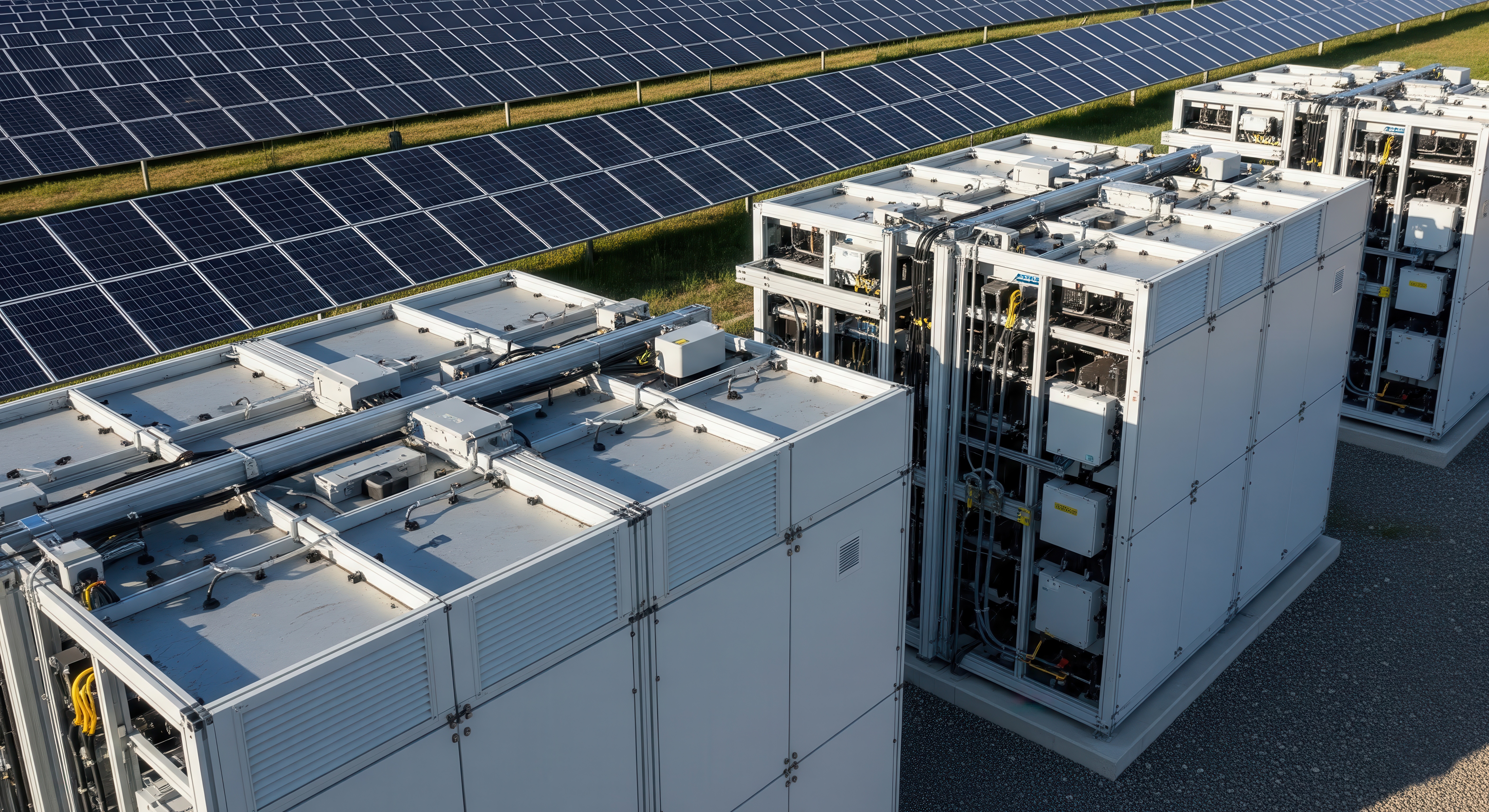
A BESS is essential for maintaining the system’s resilience, with its key roles being to firm renewable generation, store surplus energy and shift or dispatch renewable energy to better fit customer consumption profiles. However, there are also additional roles a BESS can play that offer even broader benefits. Let’s explore the key roles of a BESS briefly below:
A BESS is primarily responsible for storing excess energy generated by renewable sources, such as solar and wind, during periods of low demand or high generation. This stored energy can then be dispatched when needed, ensuring a steady and reliable power supply even when renewable sources are intermittent or unavailable. This function significantly enhances grid stability and resilience.
Hybrid microgrids often consist of a mix of renewable and non-renewable energy sources. A BESS plays a crucial role in balancing these different sources to match the energy demand. When renewables generate more power than required, excess energy is stored in the batteries, and when demand exceeds supply, the BESS supplements power, preventing blackouts and optimising system performance.
During peak demand periods, hybrid microgrids may need additional power from the grid. A BESS can be strategically deployed to shave peak loads by supplying electricity during these times, reducing the need for expensive grid power. This not only lowers operational costs but also enhances the economic viability of microgrid installations.
Maintaining grid frequency and voltage within acceptable limits is vital for the stability of any electrical network when it is not possible to rely on a mains connection. A BESS can rapidly respond to fluctuations in these parameters by injecting or absorbing power as needed. This capability helps mitigate voltage sags and frequency deviations, enhancing the quality and reliability of the electricity supply.
Sources in microgrids can run either connected to the grid or in islanded (off-grid) mode. Some sources within a microgrid are grid-forming, meaning they are able to maintain stable voltage and frequency and supply the load alone (typically generators, mains and some inverters). Others are grid-following, meaning they must always have a voltage and frequency reference from another source in order to provide active and reactive power (typically renewable resources, as they are unpredictable and dependent on weather conditions).
Grid-forming refers to the capability of a power source, such as a generator or an inverter, to independently establish the grid’s voltage and frequency, essentially acting as a “leader” in grid power quality control. In a grid-forming system, the power source sets the voltage and frequency, and other devices on the grid, including grid-following inverters and loads, synchronise with it.
Grid following refers to the capability of a power source to operate in synchronisation with the grid’s voltage and frequency, essentially “following” the grid’s lead. In a grid-following mode, the power source or inverter monitors the grid’s voltage and frequency and adjusts its output to match these parameters.
A generator and a BESS have distinct functions and modes of operation, but they can complement each other in some applications to provide reliable and efficient power solutions, benefiting from the strengths of both sources and mitigating their weaknesses.
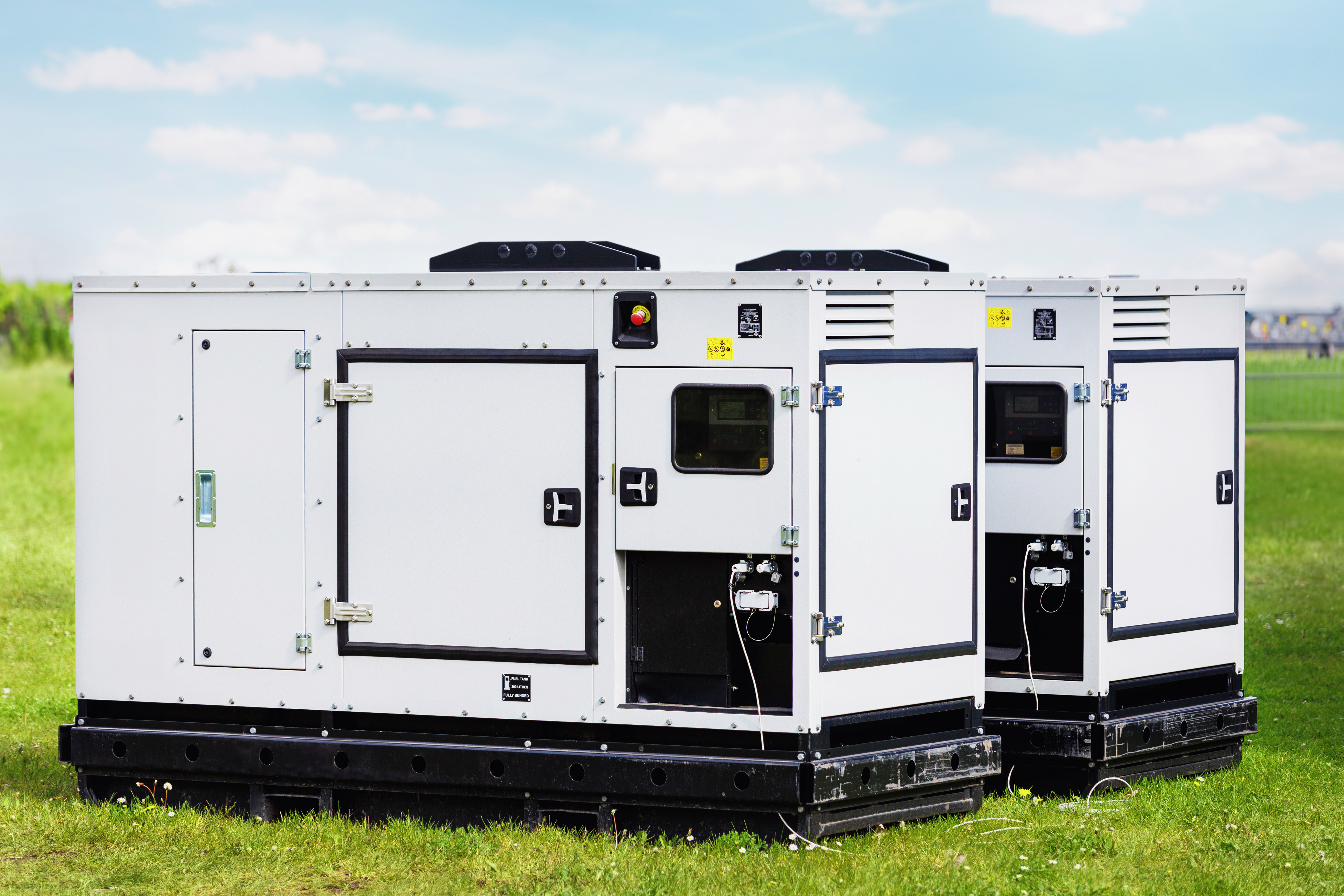
A generator is primarily designed for power generation by converting mechanical energy (usually from the combustion of diesel or gas) into electrical power. The energy conversion has only one direction, and because of the fuel cost it is commonly used for providing electricity in situations where grid power is unavailable or unreliable, or as the last-priority source during peak demand periods. A gen-set is capable of operating in both grid-following and grid-forming modes depending on the selected scenario; therefore, it can provide power-backup functionality without interruption.
A generator controller is primarily responsible for managing and controlling the operation of the generator. It regulates the generator’s output to maintain stable voltage and frequency or to provide active and reactive power to the microgrid. It monitors performance and ensures the generator operates efficiently in response to varying load demands. This controller governs the generation of electrical power when needed, such as during power outages or peak demand periods. It turns the generator on and off when required, taking into account response time and the starting and stopping procedures of the gen-sets. Generator controllers can also control multiple generators of different sizes and from different brands to create a larger power generation system.
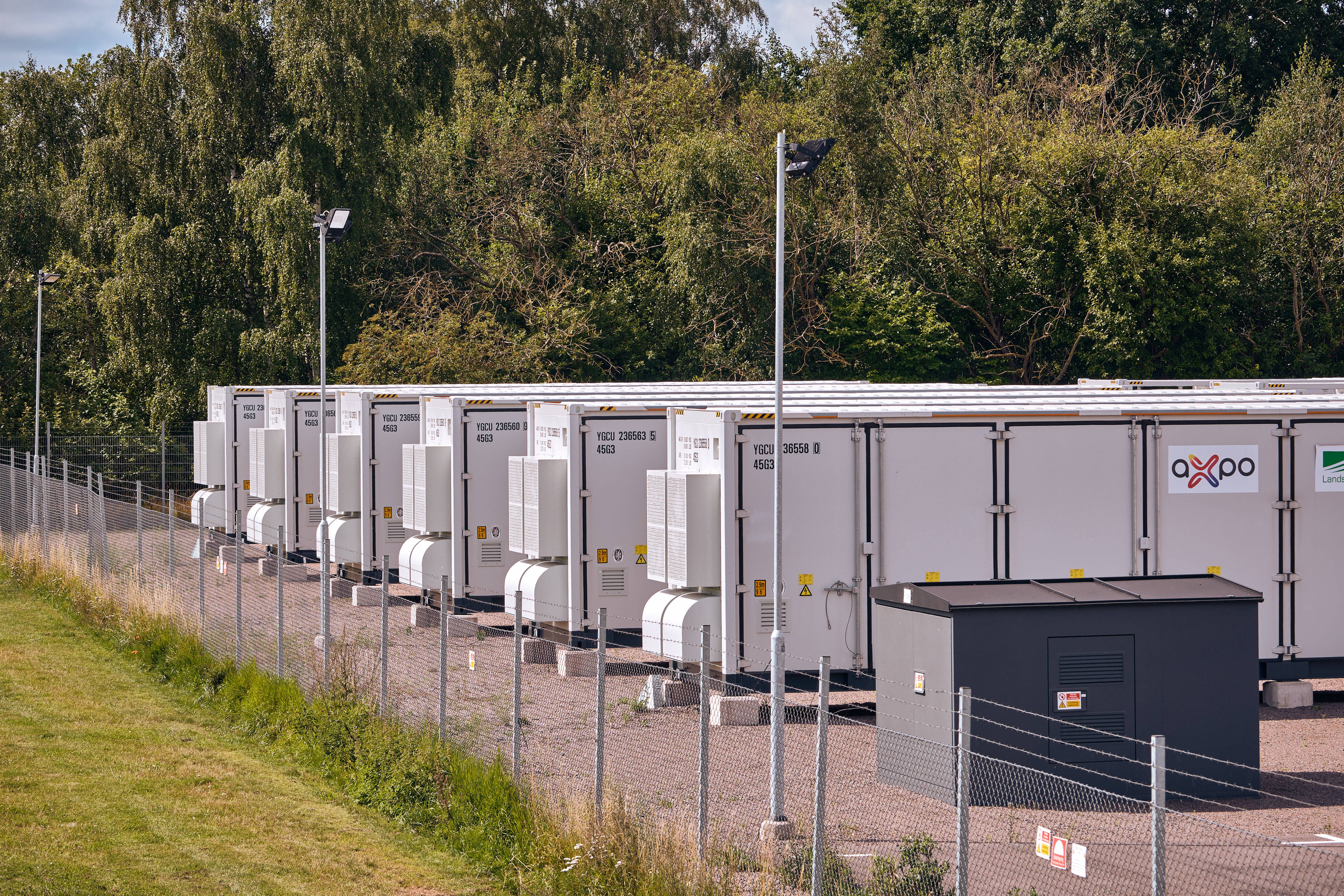
On the other hand, a BESS stores electrical energy in chemical form within rechargeable batteries for later use. The conversion of energy happens both ways; therefore, the price of the stored energy equals the cost of the source that generated the energy plus the efficiency of the conversion. Its primary function is to store excess energy during periods of low demand or high renewable energy generation, effectively delaying or avoiding PV curtailment. The BESS then releases this energy during peak demand or when the grid requires stabilisation support.
A controller for a BESS is similar to a gen-set controller but has a more complex role overall, managing both the BMS and PCS systems, as well as HVAC, fire suppression and other auxiliary systems. BESS controllers oversee charge and discharge cycles, monitor battery SoC and SoH, and ensure battery safety, playing a crucial role in the batteries’ longevity. The controller benefits from the almost immediate start capabilities of the BESS, its fast response to power commands and its ability to support seamless transitions from on-grid to off-grid operation.
A supervisory microgrid controller can be used to integrate generators, pre-integrated BESS units and renewables to form a homogenous power-generation system.
A BESS plays a pivotal and multifaceted role within hybrid microgrid systems. It is critical for maintaining the stability, efficiency and sustainability of these systems, while also acting as a catalyst for the integration of renewable energy at greater scales.
As microgrids evolve at an exciting pace, it is crucial to understand BESS control specifications and how they differ from traditional gen-set control systems. A deep understanding of the specific functions of a BESS and the benefits it can offer will be among the most important factors determining the speed and scale at which hybrid microgrid sites continue to grow.
The Battery Energy Storage System is highly dependent on its PCS, as the battery itself is simply the accumulation of stored energy. It is the PCS that determines whether a BESS is capable of PQ, VF or VSG control, and whether it can transition from grid-following to grid-forming mode, or operate only in grid-following mode. During the early design phase, it should always be confirmed with the PCS manufacturer whether this transition function is available in their inverter, as this defines the role the BESS may play within a hybrid microgrid.
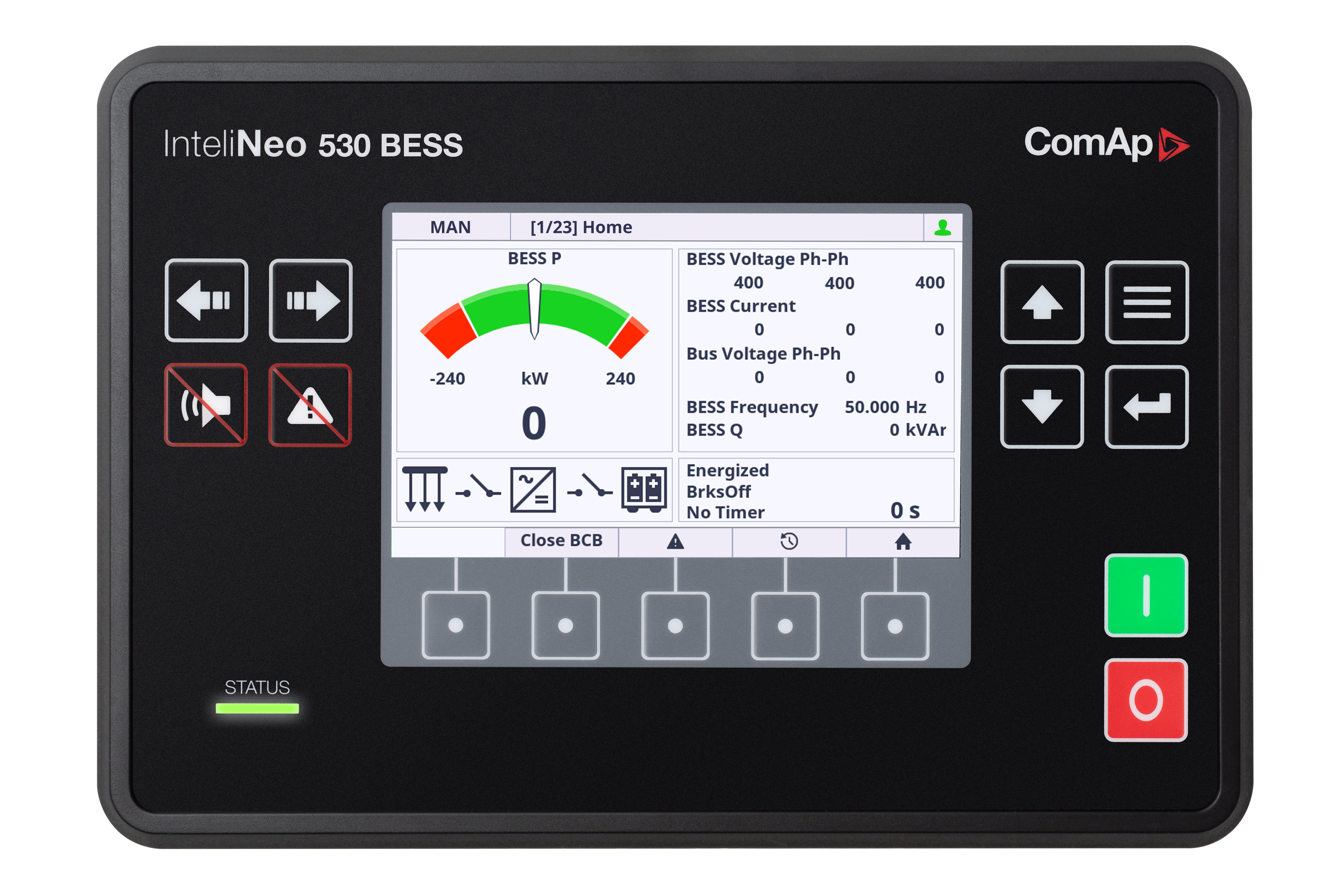
As mentioned above, the overall operation of the BESS needs to be controlled and monitored by a control system that oversees charge and discharge cycles, responds to grid signals and interfaces with the BMS, PCS (inverter) and other components. Additionally, it provides real-time data on system performance, battery status and energy flows for operators and maintenance personnel.
ComAp’s latest and most innovative solution for BESS control is the InteliNeo 530 BESS, an advanced energy management system that provides secure and reliable monitoring and control to ensure the highest level of storage-system performance. This BESS controller facilitates easy and direct integration of the BMS with the PCS within a BESS and provides monitoring, control and protection of auxiliary systems, including HVAC, fire detection and suppression, ingress detection and E-stop.
As cybersecurity is a key topic for any remotely connected technology, the InteliNeo 530 BESS is no exception and provides a reliable control option for battery storage with adherence to the latest global ISA 62443 security standards. Together with encryption protection, it prevents any unauthorised access to the controller and keeps your data safe.
To meet the ever-growing and diverse needs of the energy sector, the InteliNeo 530 BESS provides a modern, smart control solution to ensure the efficiency and reliability of Battery Energy Storage Systems.
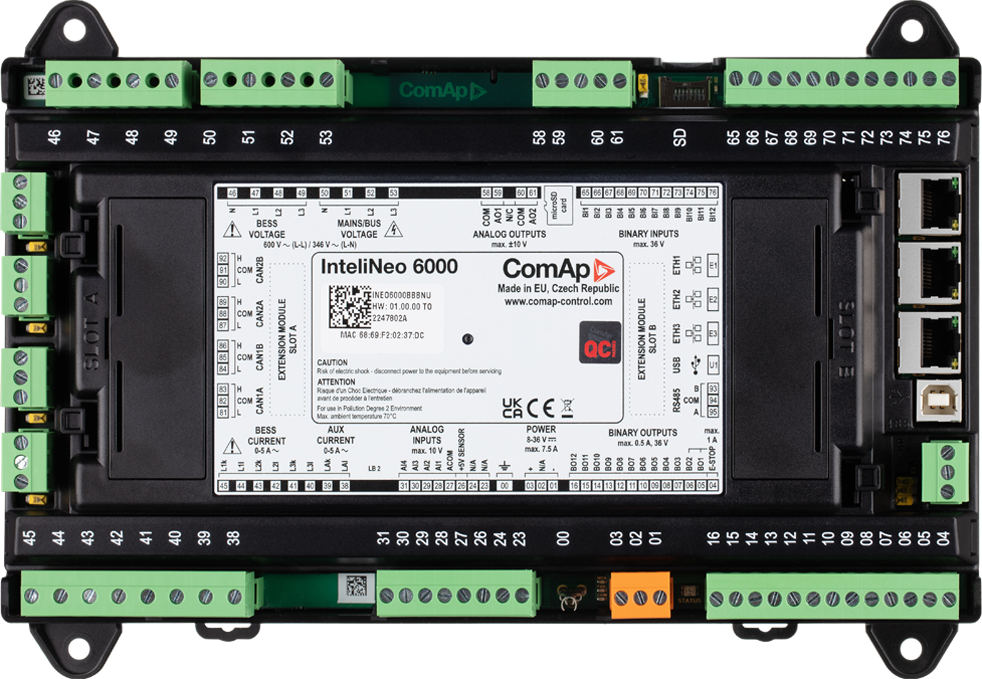
ComAp’s InteliNeo 6000/5500 represents the current generation of microgrid controllers, designed to seamlessly integrate PV, mains, generators and BESS into one homogenous microgrid. Acting as the central energy-management unit, and supporting various modes of control — PQ, VF and VSG — the InteliNeo 6000 oversees power distribution and seamless transitions between energy sources, ensuring uninterrupted supply and optimised performance.
This powerful controller enables real-time monitoring and control of all microgrid components, managing the BESS local controller, coordinating with the PV inverter and generator for optimal dispatch, and maintaining stable interaction with the utility grid. Advanced algorithms allow the InteliNeo 6000/5500 to balance renewable generation with storage and backup power, reducing curtailment and maximising renewable utilisation.
Built with cybersecurity and reliability at its core, the InteliNeo 6000/5500 complies with the latest ISA/IEC 62443 security standards, ensuring protection against unauthorised access and maintaining data integrity through encrypted communication and secure remote connectivity.
Thanks to its scalable and modular ComAp control-architecture design, ComAp controllers (InteliGen, InteliMains, InteliNeo, InteliSys) can be selected to cover a wide range of applications — from small hybrid sites to complex, multi-source microgrids. Combined with ComAp’s intuitive configuration tools and cloud-based monitoring solutions, they offer operators complete visibility and control over their distributed energy systems.
.jpg?f=Avif&w=600&h=440&t=48&l=0&cw=5712&ch=4188&q=70&v=639033106938047093)


